Sunday, March 3, 2013

Organic and Fair Trade Chocolate Bars - The (Almost) Complete List of Brands in North America

The list below focuses on a very specific segment of the North American chocolate market. I have labelled it as "Organic and Fair Trade Chocolate Bars", which are sold in supermarkets, local grocery stores, health food stores and other retailers on a national level (i.e. all across Canada or the U.S., or both). They are usually 80 to 100 grams (3.5 oz) in size, but common packaging makes them all appear to be about the same size. If you are a chocoholic like me, you will know exactly what I am talking about.
 
The price range for chocolate bars in this segment is about $3 to $6 Canadian (and similarly in the U.S.) for a chocolate bar that is 80 to 100 grams, making it a premium price at the supermarkets and pharmacies. However, this is only a middle-to-upper range price within the entire chocolate market when compared to craft, single origin and premium-bean chocolate, where the price starts at about $5 for 50 grams and higher.

To learn more about this market and read an observational analysis of its growth trends and competitive behaviour, stay tuned for an upcoming article on this site.

If you are looking for a list of every chocolate bar that is either organic or Fair Trade in North America, unfortunately you have come to the wrong place. Numerous craft chocolate makers and large chocolate manufacturers have added an organic, Fair Trade or Rainforest Alliance option to their product lists in recent years. Such a list would take me years to develop (I'm not saying that I won't do it one of these days, but just not today!).

What you will find below is a list of Organic and Fair Trade Chocolate bar brands in North America that I feel compete directly in the same market space. There may be other brands in America and other regions of Canada that I have not come across yet, so I will add to this list as I learn of them. These are the most common ones that I have seen in stores and that fit within the specific price range/product size that I outlined above.

List of Organic and Fair Trade Chocolate Brands (and their makers) in North America:


·         Alter Eco (San Francisco, CA) - Certified as both Organic and Fair Trade. I am IN LOVE with two of their chocolate bars: the 63% Dark Cacao with Nibs bar, where the nibs add that fruity, zesty and acidic flavour of unprocessed cacao in a chocolate that has a nice flavour to begin with. Also their 60% Dark Chocolate Quinoa bar – I finished it in less than a day! But since these bars are only 80 grams rather than 100, there is a little less guilt. The chocolate is also soy-lecithin free and listed as gluten free. Although Alter Eco is American, the chocolate is also available in Canada. http://www.alterecofoods.com/products/chocolate/dark-cacao

·         Camino by La Siembra Co-Operative (Ottawa, Canada) - Their 100 gram (3.5 oz) chocolate bar line-up includes three solid dark chocolate bars (a 55%, a 71% and an 80%) as well as flavoured dark chocolate bars like Espresso (my favourite), Coconut, Almond, Mint, Caramel Crunch and Raspberry. Camino’s milk chocolate bars include Milk Chocolate with Sea Salt and their really interesting 38% solid Milk Chocolate bar (this one is fun in chocolate tasting workshops to see who can identify hazelnut as Camino’s secret ingredient!). And Camino has just launched four new flavours in their 100 gram bar line: Milk Chocolate with Hazelnuts, Butterscotch & Sea Salt Milk Chocolate (oh yum!), Ginger Dark Chocolate and a 65% Chili & Spice chocolate bar. In addition to being organic and Fair Trade, these chocolate bars have real ground vanilla beans, no soy lecithin and are gluten-free. http://www.lasiembra.com/camino/en/chocolate-bars)

·         Equal Exchange Co-Op (West Bridgewater, MA ) - Also a co-operative, I call the Equal Exchange brand the American version of Camino. With a similar product line-up, they offer a range of dark and milk chocolate bars in 100 gram (3.5 oz) sizes, including an Ecuadorian 65% dark bar, a 71% Very Dark bar, and flavours like Mint, Orange, Caramel Crunch & Sea Salt, Espresso and Almond as well as a Milk Chocolate bar. Also like Camino, the chocolate is both organic and fair trade, has real ground vanilla beans and no soy lecithin. Their chocolate is available at a variety of retailers throughout the U.S.A. (I have purchased their chocolate once in Canada but have not seen it since). http://www.equalexchange.coop/chocolate-bars

·         Green & Black’s is likely the most widely known organic and Fair Trade chocolate bar brand. Green & Black’s Maya Gold bar was the original Fair Trade bar made from organic cocoa beans from Belize. The recipe was based on a spiced cocoa drink made locally by the farmer's in Belize and it is still a best seller world-wide today. Green & Black's sells many other flavours, like the Cherry 60% dark chocolate bar and a White Chocolate bar with Madagascar vanilla and 30% cacao solids (one of the few organic and Fair Trade competitors to offer a white chocolate bar) and all their chocolate is made from chocolate is made from Trinitario and Criollo cacao (that’s the good stuff!). The company is now owned by Kraft Foods. www.greenandblacks.com

·         Mama Ganache Artisan Chocolates (San Luis Obispo, CA) www.mama-ganache.com They sell three flavours of certified organic and certified Fair Trade chocolate bars in 3.5 oz (100g) packages (Milk Chocolate, Dark Chocolate and Dark Chocolate with Peppermint Crisp). These are 100% made in the U.S.A. and sales of these chocolate bars help the development of a Cocoa Study Centre in Cameroon. Mama Ganache also has a chocolate bar made from the bean, as well as filled chocolate bars that are also organic and Fair Trade (although at a higher price, above $7 per 100g/3.5oz)

·         Chocolove (Boulder, CO) www.chocolove.com They have 24 flavours in 90g (3.2oz) bars, and three of these are certified Organic and certified Fair Trade (by FairTradeUSA), including: a Cherries in Dark Chocolate bar, a Currants and Almonds in Dark Chocolate bar and a simple 73% Dark Chocolate bar. To ensure that you feel extra-good about your purchase, you will find a love poem inside the wrapper.

·         Just Us! Coffee Roasters Co-Op (Wolfville, NS) Although this Eastern Canadian co-op got its beginnings in Fair Trade coffee, they opened a chocolate factory in Hantsport, Nova Scotia in 2005 and now sell a range of 100 gram organic chocolate bars, as well as 42 gram bars and 35 grams bars (check the product list here).

·         Zazubean Organic Chocolates (Vancouver, BC) www.zazubean.com Fair Trade certified and 100% organic, Zazubean makes dark chocolate from bean-to-bar with really unique and totally awesome flavours. Currently their chocolate is only available in Canada– check the store locator for a location near you: http://zazubean.com/store-locator/store_locator.php

·         Theo Chocolate(Seattle, WA) http://www.theochocolate.com Founder, Joe Whinney pioneered the supply of organic cocoa beans into the U.S. in 1994. ECI Vanilla Nib 65% Dark Chocolate bar and Pili Pili Chili 65% Dark Chocolate bar are Organic and Fair Trade Certified by IMO. All their bars are organic and Fair Trade certified and the beans are sourced from farms in the Democratic Republic of Congo, Ecuador, Costa Rica, Dominican Republic and Peru. Products are now offered at more than 4,000 retail outlets across the U.S.A. They are also a bean-to-bar chocolate company.

·         Endangered Species (Indianapolis, IN) www.chocolatebar.com Endangered Species has a slightly different spin on their certified organic chocolate. They focus on protecting the species within the Rainforests where cocoa beans grow and they educate their chocolate-eating consumers by providing information about particular types of endangered species on the inside of the chocolate bar wrappings. Although they do not list "certified Fair Trade" on the label, they are Rainforest Alliance certified and state that farmer's are paid fairly. They have a range of five organic chocolate bars in a 3 oz size.

·         Newman's Own Organics (Connecticut, U.S.A.) www.newmansownorganics.com sells a series of chocolate bars that are organic and Rainforest Alliance Certified (not listed as "Fair Trade" specifically). They offer six flavours in both 3.25 oz and 2.25 oz sized packages. You can find more information on their flavours, ingredients and nutritional information here. You can find Newman's Own Organics at a variety of retailers all through the U.S.A., check here for a retailer near you.


If you know of a widely sold Fair Trade and Organic chocolate bar in North America that should be on this list, please add it to the Comments below and I will check it out and add it to the list! But first, see below for more chocolate bars that 'almost' made the list.

 
Fair Trade, Organic or Rainforest Alliance Only Chocolate Bars in North America:
Here are a few similar chocolate bars that compete for the same customers in the same market 'space' (i.e. similar packaging and product size, similar pricing, and a focus on Social Responsibility and Environmental Sustainability) but are not labelled as both Fair Trade and Organic:


Organic-Only Chocolate Bars:

·         Divine Chocolate (Washington, DC) Divine chocolate was started by a co-operative in Ghana that was known for ensuring fair prices to farmers. It has since invested its chocolate income into schools, water, medical clinics and other infrastructure that assists the farmers who grow the cacao. The chocolate bars are sold in the U.S. and the U.K., and in fact, I think I have purchased one in Canada. All of their ingredients are certified as Fair Trade. Although it did not make my above list because ingredients are not also listed as 'organic', it does compete direclty within the same market space as it is $3.99 per 3.5 oz/100 gram bar (according to Divine's U.S.A. shop online site).

·         PC Organics(TM) European Chocolate (Canada) www.presidentschoice.ca President's Choice 'Organics' brand includes organic 100 gram chocolate bars, including a 'European Extra Dark Chocolate' bar which is an 85% dark, a 70% 'European Dark', a 'European Milk Chocolate' bar and a milk chocolate with raisins and hazelnuts.

·         Dagoba Organic Chocolate (San Francisco, CA & Ashland, OR) www.dagobachocolate.com Dagoba is a brand of organic chocolate that is well-known in North America. It was purchased by Hershey's in 2006, so it is now more widely available. I might have included it in the listing above, but there are a few reasons why I placed it in the 'other' list: 1. The price is above the range outlined above. On Dagoba's website, the price is $3.45 (U.S.) for the 56 gram chocolate bars, which would place it just over the $6 mark. Also, it is not certified as Fair Trade, but rather Rainforest Alliance certified. They also purchase their beans directly from farmers in Peru, Tanzania and the Dominican Republic, and some consider direct trade to be better than Fair Trade. They also have organic chocolate bars for baking in 170 gram (6 oz) sizes, which you can learn more about here.

·         Trader Joe's Organic Chocolate Bars (U.S.A.) www.traderjoes.com In their numerous stores across the U.S.A., Trader Joe's sells two kinds of store-branded organic chocolate bars: a 73% Super Dark chocolate bar and the same dark bar with the addition of Almonds. Like Dagoba, this chocolate is organic, but not Fair Trade certified. Also, Trader Joe's has an affinity for beating out the competition on price, with a list price of only $1.99 (U.S.) per 3.5 oz (100g) bar.

·         Nativa™ Organics Chocolate (Shopper's Drug Mart, Canada-wide)- This is a Shopper's Drug Mart brand that is a part of their organic product line, Nativa™. There is very little online information about this product, other than a blog article that I have written and a blurry image on the Shopper's website. Although not listed as Fair Trade, these chocolate bars are clearly designed to compete within the Organic and Fair Trade market space. The chocolate bars are 100 grams and come in three flavours: milk, milk with hazelnut and dark chocolate.
 

Fair Trade-Only Chocolate Bars:

·         President's Choice Fair Trade Chocolate (Canada) www.presidentschoice.ca The PC brand offers two chocolate bars that are Fair Trade Certified by Transfair Canada, including a 100 gram 70% Dark Chocolate bar made from Peruvian cocoa beans and a 100 gram Fair Trade Milk Chocolate Bar made from cocoa beans of Ecuador. These are sold at all grocery stores that sell President's Choice products (Loblaws, Superstore, Valumart) all across Canada. 

 
Rainforest Alliance-Only Chocolate Bars:

·         Bissinger's (St. Louis, MO) - www.bissingers.com Bissinger's sell a range of 3.5 oz (99 gram) bars that are Rainforest Alliance Certified, which promotes the maintenance of eco-systems and sustainable farming. They promote their chocolate as being European but using 100% African Beans for a "Richer Chocolate Taste". I find their dark chocolate (Bissinger's 60% and 75% chocolate bar) tastes very similar to many commercially sold 60% to 80% chocolate bars that are 100 gram (3.5 oz) in size, such as Lindt, Godiva, and President's Choice's 60% to 80% dark chocolate bars, made from mixed Forasterro beans and strong vanilla extract flavour. I liked their 38% Milk Chocolate Bar very much. Their chocolate is labelled as "All Natural" as well as "Gluten-Free".


Lisabeth's Disclaimer:

The list above and market analysis is based solely on my observation of the market from a highly-engaged consumer's perspective for the last 10 years, as well as complementary market research. I have a natural need to analyze market space, since I have a whole lot of experience in competitive research and analysis from my former career in marketing and degrees in business marketing. In order to understand any market space, I always need to know who all the players are and develop lists of them, their prices, their ingredients and their marketing messages in order to learn more about the competitive behaviours within it.

So if you have concerns with my above analysis of the market, please do add your concerns or suggested modifications to the Comments below. I am always open to learning more about chocolate!

Monday, February 25, 2013

The sweet and the savoury, Conillin™ Chocolates has something for everyone


Connecticut-based Conillin™ Chocolates has an intriguing story and a totally unique product concept. They make whole freeze-fried fruit that are rolled in chocolate (panned), as well as chocolate bars with fruit flavours. It began with an idea to provide the same taste experience that you get from real chocolate-covered strawberries, but in a product that can be packaged and endure long travel and shipping.

Founder Patrick Cayer decided to freeze-dry fruit because he believed that "fruits dried with sugar produced a gummy and raisin-like texture, which in the end was too sweet on the palate" (ref). I agree. Personally, I have never liked dried fruit in chocolate for the same reason - it just tastes too sweet.  And when added to chocolate, the resulting super-sweet combination also has a chewy texture, rather than a nice chocolaty melt.

Freeze-dried fruit never seems to taste any sweeter than fresh fruit. So when combined with Conillin's chocolate, there is a wonderful fresh fruit taste without the added sweetness, and a nice crunch from the freeze-dried pieces.

This fresh-fruit flavour was clear in Conillin's jar of panned Raspberries, which I tasted for the first time a few days ago. These whole freeze-dried raspberries are lightly rolled in a semi-sweet 58% dark chocolate and then tossed in more raspberry powder for a unique look and taste. The raspberry flavour really stands out and holds all its naturally bitterness, but with a hint of semi-sweet chocolate.

I love the Raspberries because they satisfy my cravings for a chocolaty snack. I also feel less guilty while eating them; there is little fat in this product and it is mostly made of freeze-dried raspberries, with important vitamins and antioxidants. And we cannot forget those weight controlling 'rasberry keytones' that are all the rage! So I feel that this product is a way to enjoy a gourmet dessert while being healthy.

On the other hand, if you prefer your chocolate-raspberry combination to be sweet, try Conillin's 58% Dark Raspberry chocolate bar.  In this case, the chocolate's sweetness really stands out and there is just a hint of raspberry. This is a nice change from many other raspberry dark chocolate bars on the market, which are either too bitter (i.e. a 70% paired with unsweetened raspberries) or overwhelmed with raspberries and you are left crunching seeds for hours after. In Conillin's chocolate bar, you will get your semi-sweet chocolate fix while enjoying just a hint of raspberry flavour.

Conillin also sells a 38% Milk Chocolate Chai Tea bar with a nice balance of spice and chocolate, and a wonderfully smooth texture.

Their other milk chocolate bar is Passionfruit, which was also very tasty. The fruit flavour was at the forefront, but very naturally paired with the milk chocolate.

Conillin™ Chocolates uses real vanilla and no artificial ingredients - an important fact for any true chocolate lover to know!

Patick Cayer is now planning to bring his chocolate-and-freeze-dried-fruit concept to many more consumers through his Kickstarter campaign. The goal is to increase production space and distribution in order to bring  Conillin's chocolate-and-freeze-dried fruit concept to more consumers. So check it out! Every level of donation will provide you with a variety of Conillin's products to try, which are well worth the taste (speaking from experience!).

Conillin also sells jars of panned blueberries, orange pieces and strawberries, as well as an Earl Grey Tea chocolate bar. For more information on Conillin™ Chocolates, check out the website: www.conillin.com.

Saturday, February 16, 2013

From Bean-to-Bar: a Month of Do-It-Myself Chocolate Making

So how does a wanna-be-chocolate-connoisseur spend the coldest months of winter? Making chocolate of course! And not just any chocolate either, I have made chocolate from bean to bar. That's right folks, once again I have roasted cocoa beans, shelled them, and ground them until they have liquefied into real chocolate and I have done this nearly every day for the past month.

So why would someone go to all this trouble? Well, certainly not to start my own bean-to-bar chocolate business since I have no plans to invest in costly equipment any time soon. Nor do I plan to figure out where to order beans from and try to winnow the darn things in my tiny commercial kitchen, even if I would love to fill my garden this summer with cacao shells instead of mulch. Nope. No way. Those certainly are not the reasons why I have been making chocolate from bean-to-bar. 

The reason is as it always is: learn more about chocolate, understand the process by doing it myself and become a better chocolate connoisseur.

Another reason was to brush up on my skills and to develop a few new recipes.  I was giving a class last weekend on making chocolate at home by using simple, inexpensive appliances like a blender and a coffee grinder, so I wanted to go beyond my usual recipe and test several different ones in preparation (like homemade chocolate with lightly ground espresso beans - yum!).  In the end we only had time to try out one recipe in the class. But I still learned a lot this past month.

One of the things I learned the most about was roasting. Roasting cocoa beans greatly affects the final chocolate flavour. So by making several batches of chocolate using both roasted and unroasted beans, I learned how the flavour differs depending on the darkness of the roast (or lack thereof). I also learned that chocolate made with roasted cocoa beans does taste better. Do not get me wrong: both the raw and roasted chocolate that I made tasted good to me, but the chocolate made with the roasted nibs had a smoother and more well-rounded flavour.

I also learned that it is not easy to tell the difference in taste between cocoa beans before they are made into chocolate. I suppose that some people are advanced enough to taste the difference between cocoa beans from different origins when tasting them plain and raw, but I am just not there yet. So this taught me that I have more to learn.

And my new goal? Learn to tell the difference in cacao bean flavours by origin, or at least identify which is better, tastier or has a better flavour profile. Is that even possible? I don't know. But I intend to try!

Hummingbird Chocolate Maker from Ottawa helped me get started. They sell roasted Dominican Republic cacao online, which I have previously ordered.  Then a few weeks ago, I put in another order for their beans, but this time asked for a different origin. They sent me roasted Bolivian cacao. So I have been eating cocoa beans every day in order to taste the difference between Bolivian cacao and Dominican Republic cacao. I've also been tasting these against various brands of nibs from Ecuador and Peru. So far, I can still only taste the difference in the roast (the Bolivian have been roasted for longer, some of the nibs I roasted myself, and some are raw), but I think I might be getting somewhere with tasting the difference.  However, they most often still taste like cacao to me: unsweetened, crunchy and bitter.

What's also great is that after a month of bean-to-bar chocolate making, I have two new chocolate-related addictions:
  • I LOVE snacking on roasted, unsweetened cacao beans (never thought that would happen!) and,
  • Crunchy, under processed, unconched chocolate is the bomb! There is such a tangy, acidic flavour to it and I have developed a fondness for it and for the crunchiness. This does not mean that I will never eat smooth, fine chocolate again, it just means that I now can satisfy my chocolate craving when I have no other satisfactory chocolate on hand. I can simply take out my coffee grinder, grind up cacao nibs and sugar and in 15 minutes I will have an old-fashioned style chocolate to snack on.  

What else did I learn?
This is the B&D Smartgrind(r)
- excellent for grinding up
cacao beans & nibs.
  • Only certain types of coffee grinders work for grinding cacao beans at home.  Check out the photo of the one that works best on my previous post about making chocolate from bean-to-bar at home: http://ultimatechocolateblog.blogspot.ca/2012/04/making-chocolate-from-bean-to-bar-at.html I learned that a Black & Decker Electric Coffee Grinder is amazing at grinding coffee, but not for cocoa beans. Unfortunately cacao quickly liquefies from the heat of it and gets stuck deep within the grinder.  It took me several hours to clean it out, so now it is back to being a coffee grinder again! Instead I bought a second blade grinder called the Black & Decker Smartgrind(R) Coffee Grinder with stainless steel grinding blades.  It was only $19.99 at the Home Hardware. Check www.blackanddeckerappliances.com.
  • I also learned that you can make very small batches of chocolate in your Coffee/Herb grinder, which will liquefy if you add melted cocoa butter, but it is not as fine (grittier) than if you transfer to a decent blender with a new blade (I used an old blender at one point and it did not do anything to further refine my chocolate beyond what the coffee grinder did - but my trusty Osterizer 12-Speed Blender worked great.
  • A tea monitor works
    great for chocolate!
  • There is such a thing as a tea monitor and it can be used to measure temperature of chocolate. I've been using it for a month and it works great.  See the picture on the right.

Thursday, February 7, 2013

Raw Chocolate: Forget the Next Big Thing, it is the Right-Now Thing

The Story of Raw Chocolate: The Upside, The Downside and The Middle Ground
For a list of raw chocolate makers, click here.


Two years ago I bought a “raw chocolate” bar at a local food store. So I decided to write an article on raw chocolate and why a chocolate manufacturer might make chocolate using unroasted cocoa beans. But at that time, Google Searches on the subject were a disappointment and there seemed to be little information available.  All I learned was that raw chocolate is made from cocoa beans that are unroasted and Pacari is a brand of raw chocolate. But I still could not quite understand why raw.

Today ‘raw chocolate’ seems to be everywhere, with more and more chocolate makers using unroasted cacao to make chocolate and explaining exactly why they do this. This has clearly become a chocolate trend.

So why do they make it? The reason is similar to why we might choose to eat raw fruit and vegetables over cooked ones: consume more nutrients. One chocolate maker, Amai Raw Chocolate, described their reasoning as: “It maintains its nutritional density because it is not subjected to the same high heat as traditional/ commercial chocolates.” (ref).

My research on raw chocolate has told me that it started out as being made by hand, and often includes natural and low glycemic sugars, such as coconut sugar or xylitol, and it is often mixed with other raw, organic fruit and 'superfoods', like Maca root in many cases. The cacao beans used are organic and the resulting chocolate is most often vegan.  Also, what I uncovered is that many of the original makers of raw chocolate participate in a yoga lifestyle or in holistic healing.

However, more and more bean-to-bar chocolate makers are beginning to add a raw chocolate bar to their range of product offerings. As a result, smoother-textured versions of raw chocolate are becoming available. Also, these newer raw chocolate bars are being introduced by businesses with a lot of experience in chocolate production, flavour mixing and development, so the taste is improving.

There is some controversy in the chocolate world over raw chocolate. Raw food advocates say that the cocoa beans and the resulting chocolate can not be heated to temperatures above 118 degrees Fahrenheit (or 114F in some cases) while being processed. However, Jeffrey G. Stern, a cacao education professional, says that after the beans are fermented and dried in the sun on cement pads in the jungle where they are grown, the temperatures reach above 118 degrees F. So no chocolate can truly be 'raw' as defined by raw food advocates (ref). And unfermented beans have such a poor taste, that no one would dare eat them or turn them into chocolate. Some describe the taste of unfermented beans as "soggy, unripe nuts" or more vividly as "cats pee" (ref: Twitter, @ultimatelychoc).

Another concern about raw chocolate is bacteria, bugs, and other potential health hazards that may be on the cocoa beans, which can only be killed off by heating them. Raw advocates argue that "...chocolate-industry professionals...claim that the conventional method of heating chocolate is necessary to kill bacteria present in the raw ingredients, and that even after cooking, companies such as Cadbury's have still suffered salmonella outbreaks." (ref) However, it is understandable why large companies would roast the beans, if not for improved taste, but to ensure that they have done everything possible to remove the risk of illness for their customers.

Roasting cocoa beans is similar to roasting nuts, like almonds and pecans. It not only kills bacteria, it improves overall flavour. I have been making chocolate at home with my little coffee grinder and blender, and have now made some chocolate with roasted beans and some chocolate with raw beans. I can tell you that flavour is much improved with roasted beans. Much like with raw versus roasted pecans or other nuts, roasting pulls out some of the tartness and sweetens the end flavour in a way. It also adds a beautiful dark chocolate colour to cacao nibs, versus the grayish colour of raw nibs.

All that said, I still sit on my chocolaty 'fence' of raw versus roasted. Like with most other food arguments, I am just not sure which is better for my health? It is sort of the same as the debate over butter versus margarine. Or diet pop with aspartame versus full-sugar pop. But in the case of raw chocolate, it is the argument: more nutrients and risk of bacteria versus less nutrients but better taste and low risk of bacteria. So my decision is to do what I always do: mix it up. A little of raw chocolate at times to get those extra antioxidants and nutrients and a little (well, a lot) of roasted at other times.

So I have chosen to take the middle road and just be happy that there are more chocolate makers in this world, adding more and more options to choose from.
 If you want to learn more about raw chocolate, there are a few books on the subject, including:
 
· Naked Chocolate by David Wolfe and Shazzie (Barnes & Noble Link) - this is one of the originals. David Wolfe introduced the concept of raw chocolate as a holistic and spiritual treatment to life's health challenges. Includes an "unconventional history of cacao".
· Raw Chocolate (Barnes & Noble Link) - with this book, learn to make the chocolate, then make many recipes like truffles, dipped fruit, cakes and more with a raw chocolate base.
· Ultimate Raw Vegan Chocolate Recipes book (Barnes & Noble Link)


 If you are interested in trying Raw Chocolate, you will find a full list raw chocolate bars and confections, a long with links to their makers' websites here: http://www.ultimatechocolateblog.blogspot.ca/2013/02/the-ultimate-raw-chocolate-list.html.

The Ultimate Raw Chocolate List

If you are looking for raw chocolate brands in your region or throughout the world, you have come to the right place. Below is a list of raw chocolate makers by the country in which they are sold and/or made. For information on this trend, which has been dubbed "The Raw Chocolate Revolution" by some, and both the benefits of and concerns with raw chocolate, please see my recent article here.

Canadian:
  • ChocoSol Traders (Toronto, ON) http://chocosol.posterous.com/ They make a range of bean-to-bar chocolate and offer a few options for raw chocolate, including a sugarless base for chefs and raw truffle lovers: http://chocosol.posterous.com/pure-rawness. Available at various Farmer's Markets and locations throughout Toronto.
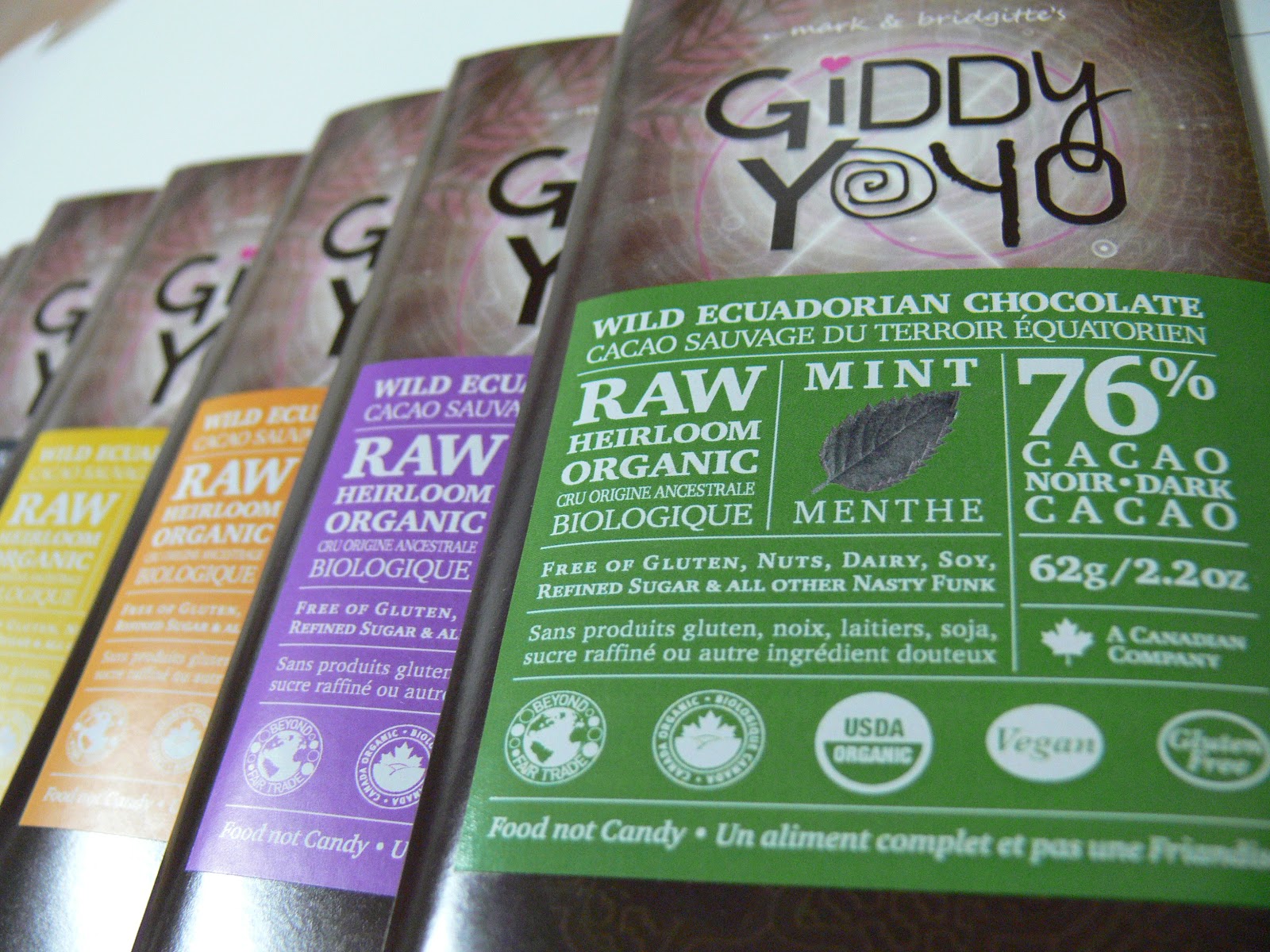
  • Giddy Yoyo www.giddyyoyo.com Makes a range of flavoured 75% dark raw chocolate bars that is gluten free, soy free, dairy free, and free of refined sugar and "other nasty funk" as the folks at Giddy Yoyo like to say. They also sell raw cacao nibs, which I received as a gift at Christmas. It was purchased at HomeSense.
  • Olivia Chocolatiers (Cantley, QC) www.oliviachocolatiers.com This Quebec-based bean-to-bar chocolate maker has a new raw collection of chocolate bars made from non-roasted Trinitario/Criollo. The collection includes: a 92% Maple Raw (I've tried this and it is bitter, but very good), a Raw 86% and a Raw 76% chocolate bar. Available in various locations in Quebec, Ontario and B.C. and can be purchased online.
  • Living Libations (Haliburton, ON) www.livinglibations.com A fun, nutty couple from Haliburton who make raw chocolate that is more like a 'food' with the purpose of holistic healing and energy building. Their chocolate includes maca root, camu berries and other superfoods. They have excellent quotes on their website from celebrities like Alanis Morrisette and Woody Harrelson, who have tried their chocolate.
  • Live on Chocolate (Toronto, ON) Facebook Page Raw chocolate and desserts made with cacao from Ecuador. Available at various locations throughout the city.
American:
  • Amai Raw Chocolate (San Meteo County Peninsula, California) www.amairaw.com Sell raw chocolate by the ounce, chocolate dipped bananas, cashew cups, caramels and more.
  • Lulu's Chocolate (Sedona, Arizona) www.luluschocolate.com Raw, vegan, organic, fair trade and gluten-free chocolate, including truffles, buttercups and chocolate bars. And some pretty fun pictures on their website advertising the chocolaty underwear that they sell!
  • UliMana (Asheville, NC) www.ulimana.com Awesome-looking raw, vegan truffles. Their first truffle was inspired by David Wolfe's book, Naked Chocolate. They sell worldwide.
  • Gnosis Chocolate (New York, NY) www.gnosischocolate.com Hand-made, sweetened with Coconut Palm Sugar, Sourced directly with "raw integrity" from origin, and infused with superfoods and functional herbs. (ref) Uses raw cacao from Bali, Ecuador, Peru, Grenada, & Madagascar which are turned into truffles, gift collections, etc. plus single origin bars (Madagascar, Bali, other). Also works with Francois Pralus to make raw cacao paste. Ships world-wide.
  • Madre Chocolate (Honolulu, HI) www.madrechocolate.com This is true Hawaiian chocolate and as I've written before, I love this brand. I have never tried their raw chocolate bar; it is not widely available & is limited edition, and it disappears quickly when they make it!
  • Luminaria Raw Chocolate / Luminaria Guiltless Chocolate (Santa Monica, CA) http://indulge.luminariachocolate.com/ Organic raw chocolate marketed as having only 1.5g of natural raw sugars and each bar is under 100 calories. There is not much on their website, you will find more on info their facebook page.
  • Pacari Ecuadorian Organic Chocolate (Ecuador, but with US sales) www.pacarichocolate.com I have tried Pacari's chocolate and recall that I enjoyed it very much. They have line of raw chocolate bars (70%, 85% and 100%), which is probably the most widely selling raw chocolate brand available. Single origin chocolate made entirely in Ecuador.
  • Sacred Chocolate (Marin Country, CA) www.sacredchocolate.com  This chocolate is stone ground and kept under 115 degrees Fahrenheit from bean to bar. They hand pour and hand wrap each bar in a small custom designed, certified organic, vegan, and 100% renewable energy and carbon balanced factory. This chocolate brand was founded by David Wolfe (one of the authors of the book Naked Chocolate) and Steve Alder.
  • Fearless Chocolate (Berkeley, CA) www.fearlesschocolate.com They favour "bold and dynamic" flavours but keep their recipes simple and uncluttered to allow "the natural vibrance of each ingredient to shine". Their chocolate bar range includes flavours like 70% Exploding Coconuts, 70% Green Tea Mint and a 75% Dark as Midnight bar. Buy online or check their Store Locator for a retailer near you.
  • Santosha Chocolate (Asheville, NC) - Raw chocolate that is stoneground and certified organic, vegan, soy- and GMO-free and low GI because it is made with coconut palm sugar. In addition to a single-origin 85% Peru, they also offer such flavors as:  Coconut & Black Lava Salt, Citrus & Maca, and others.  www.santoshachocolate.com   
  • Antidote Chocolate (Brooklyn, NY) www.antidotechoco.com Bean-to-bar chocolate made with raw and roasted Arriba Nacional cacao beans. The chocolate is also organic and vegan. They offer a range of 73% to 100% dark chocolate bars. Sold in a variety of stores across the country, or buy online here.

United Kingdom and Other:
  • The Chocolate Tree (Edinburgh, Scotland) http://www.the-chocolate-tree.co.uk makes chocolate straight from the bean in a private kitchen in Haddington, and has a storefront cafe at 123 Brunstfield Place. To complement their range of single origin chocolate bars, they have recently begun to make a rawMadagascar bar with 68% cacao solids. It is available to purchase online here: http://www.the-chocolate-tree.co.uk/products/single-origin-chocolate-bars/.
  • iQ Chocolate (Manor Loan, Stirling, Scotland) http://www.iqingredients.com Scotland's bean to bar chocolate makers. Specialising in making single origin, raw chocolate by stone grinding the beans slowly and coconut blossom/palm nectar as a sweetener.
  • Conscious Chocolate (Kent, UK) www.consciouschocolate.co.uk or http://www.consciouschocolate.com Handmade, raw, organic chocolate. Free from pesticides, dairy, soya and gluten. Sweetened with natural agave nectar. Made in Kent, sold worldwide.
  • Ombar Superfood Chocolate (Cambridge, UK) http://www.ombar.co.uk Ombar's raw chocolate is made with coconut sugar and freeze-dried fruit. Also, it's 100% organic and sustainably sourced. Twitter: @OmbarChocolate  
  • Kali Ma (Jersey, Channel Islands) http://earth-beauty.com/kali-ma-raw-organic-chocolatesources/ Eco-friendly, 'high vibrational chocolate', raw, dairy free, gluten free and most of the chocolates do not contain sugar and are instead sweetened with agave nectar. Made in Jersey, off the coast of Normandy, France but sort of part of the UK, also independent?
  • The Raw Chocolate Company (West Sussex, UK) www.therawchocolatecompany.com - a full range of flavoured chocolate bars and other raw chocolate confections.
  •  The Raw Chocolate Shop (United Kingdom) www.therawchocolateshop.com - they do not make chocolate, but this is a 'one-stop' shop where you can buy many brands within one order for one shipping price, including Pacari and The Raw Chocolate Company products and nearly all the UK brands listed here.
  • Elements for Life (UK) www.elementsforlife.co.uk They sell a kit for making raw chocolate yourself (no actual nibs or beans int he kit though, just raw cacao powder & cacao butter) and also sell the Yummy Scrummy Brownie and raw ingredients like nibs and nuts so you can make your own creations at home.
  • Booja Booja (Norwich, U.K.) www.boojabooja.com/chocolate They sell vegan, dairy-free, organic and raw chocolate products, including raw Nacional Arriba cacao beans and nibs from Ecuador, a large collection of truffles and ice cream. You can find them in stores in London and other parts of England, Wales, Scotland and Ireland. Check their website for the full listing.
  • Mulu Chocolate (Devon, UK) www.muluchocolate.co.uk/ Sells a range of handmade bars and buttons throughout the UK and online.
  • Rawr Chocolate (Cambridge, UK) www.rawrchoc.com dairy free, refined-sugar free, organic, handmade raw chocolate. Sells a large range of raw chocolate bar flavours.
  • Living Food of St. Ives (Cornwall, UK) https://www.livingfood.co.uk/Raw_Chocolate_Pie Not sure it if these 'pies' / bars can be classified as chocolate, but is made with cacao nibs, various ingredients and held together with coconut oil. A large range of interesting flavours.

This list is by no way complete, but that is my goal! So if you know of any other raw chocolate makers, please do add them to the comments below and I will update the list periodically with your suggestions. Or feel free to e-mail me at ultimatechocolateblog@gmail.com.

Sunday, February 3, 2013

For an intense chocolate experience, try Peru's Pure Nacional cacao

Simple Ingredients; complicated history

Well, I did it. I finally tasted chocolate made from Peru's pure Nacional cacao. After reading much about this once-thought-to-be-extinct cacao bean, I thought it was high time that I experienced it first-hand. After all, how can a person who is on a quest to become a chocolate connoisseur not taste chocolate made from a rare and highly acclaimed bean?

According to an article in the New York Times, the Peruvian pure Nacional cacao bean is a very rare bean indeed. In fact, it was thought to be extinct until two men, Don Pearson and Brian Horsely, who were providing supplies to mining companies in a hidden mountain valley of the Marañón River, came across a cacao tree. They sent the beans to the U.S. government's Agricultural Service to be tested and discovered they had essentially found a cacao 'treasure chest'.

At one time, pure Nacional cacao was widely grown in Peru, being part of the usually resilient Forastero-tree family (as opposed to Criollo or Trinitario type of trees). Eventually it was nearly wiped out by disease, with some still growing there but not pure. But thanks to Pearson and Horsely and a Swiss chocolate expert, 15 tons of 68% dark chocolate were made from the beans and processed in Switzerland by a chocolate company (ref).

Also according to the article, another unique aspect of the pure Nacional bean is that some of the beans are apparently white, a result of the trees being left undisturbed for hundreds of years.  They still turn brown when roasted, but this differs greatly from most other cacao beans, in that they start brown, reddish or purplish.

Canadian chocolatier, Christophe Morel, must have gotten his hands on some of this precious chocolate because I received an expensive 80 gram 2011 pure Nacional Pérou chocolate bar for Christmas (it cost $20 for one bar). I savoured the chocolate for the entire month of January, eating one small piece at a time. And what an enjoyable experience it was. The chocolate was very rich in flavour, and intense, just the way I like. Also, it had an excellent colour and snap, indicating expert tempering on the part of Christophe Morel.

Clay Gordon, a chocolate expert and founder of the The Chocolate Life, had the same experience with the pure Nacional chocolate as me when he tasted a bar made of the same chocolate, but marketed by another chocolatier.  He wrote "...Nacional is known for fruity/floral aroma...yet the chocolate did not deliver on that expectation." (ref)  I felt the same, that it was not fruity or floral.  It was more intense with deep flavours that I could not really categorize. However, I did enjoy the chocolate and its rich flavour immensely.

Some key points on the pure Nacional Peru cacao bean:
  • It is related to the nacional (Arriba) of Ecuador, but it grows at higher altitudes
  • Also called Fortunato No.4 chocolate and produced by Marañon Chocolate, a company founded by Dan Pearson and Brian Horsely after their discovery of the beans
  • Marañon Chocolate pays premium pricing and a percentage of the profits to farmers, ensuring a fair trade for the farmers who cultivate the pure Nacional (ref)
  • The company that makes the chocolate from the beans for Marañon is kept very hush hush, although Clay Gordon believes it is crafted by Felchlin (ref).
  • About 40% of the beans are white - there is a gorgeous picture with a great example of the white bean on Marañon's main home page: http://www.maranonchocolate.com/
So where else can you buy this chocolate?
Besides Quebec chocolatier Christophe Morel, who sells the bar online as well as in stores in the Montreal area, it is also available in the Gatineau/Ottawa area by chocolatier rochef, in Alberta by Sweet Lollapalooza Confections and in the Vancouver and B.C. regions by thierry, gem chocolates and Cocoa West Chocolatier. Two Canadian wholesalers also carry the product Point Carré and Quizna.

In the U.S. it is widely available by at least one chocolatier in most major cities.  You can check the list here to see where it is available near you: http://www.maranonchocolate.com/select-chocolatiers/.  The same list outlines chocolatiers in Europe and other regions of the world.

Here are the package details from the chocolate that I tasted this month:

CM Chocolatier Pure Nacional Pérou, 68% cacao, 80g (2.8 oz)
Christphe Morel Chocolatier (Montreal, QC, CANADA)
www.morelchocolatier.com
Ingredients: Dark chocolate (cocoa mass, sugar, cocoa butter). Allergies Allert: All our products may contain nuts, peanuts, milk protein, soybeans, gluten and sorbitol.